From the blog
Where This Panel’s B12 Fits for Someone Eating Plant-Based
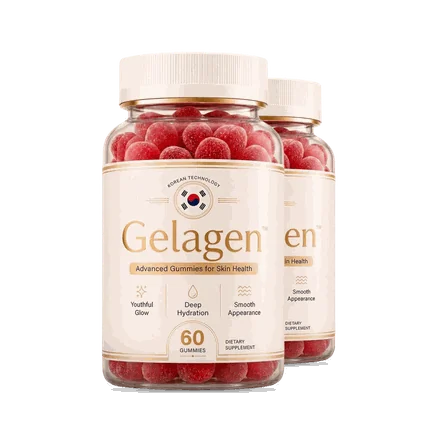
Vitamin B12 is not made by plants or animals — it’s produced by bacteria, and it accumulates in animal tissue through the food chain, which is why it occurs naturally only in animal-derived foods. NIH’s B12 fact sheet identifies vegetarians, and especially vegans, as a group at elevated risk of low B12 status for exactly that reason. Gelagen’s panel lists 6 mcg of B12 as methylcobalamin, 250% of the Daily Value — this article covers where that row fits for someone eating a plant-based diet, without claiming it replaces a clinician’s guidance.
What’s actually on Gelagen’s label
This article was checked against Gelagen’s own supplement facts panel and reviewed by Dr. Audrey Rutherford, MD before publishing. Gelagen’s panel lists vitamin B12 at 6 mcg per two-gummy serving, in the form methylcobalamin, at 250% of the Daily Value. That’s a substantial amount relative to the standard 2.4 mcg Daily Value FDA uses for B12 labeling. This article looks at why that nutrient, specifically, is worth paying attention to for anyone eating a largely or entirely plant-based diet — and why B12 is a different kind of nutrition question than most of the other vitamins on the same label.
Why B12 is a different nutrient than most
Most vitamins show up across a wide range of foods, plant and animal alike, even if some foods are richer sources than others. Vitamin B12 doesn’t work that way. It is not synthesized by plants or by animals — it’s produced by certain bacteria and other microorganisms. Animals accumulate B12 in their tissues by eating those microorganisms directly, or by eating other things (like soil-contaminated plant matter, in the wild) that carry them, and the B12 moves up the food chain from there. That’s why meat, fish, poultry, eggs and dairy are reliable natural sources of B12, and why most plant foods, grown and harvested without that microbial pathway, are not.
A 2014 review in the journal Nutrients, “Vitamin B12-Containing Plant Food Sources for Vegetarians” by Watanabe and colleagues (PMID 24803097), surveyed plant-derived foods specifically looking for ones that carry meaningful, usable B12. Its own summary is direct about how rare that turns out to be: “The usual dietary sources of Vitamin B12 are animal-derived foods, although a few plant-based foods contain substantial amounts of Vitamin B12.” Out of everything surveyed, the review identified dried purple laver — better known as nori, the seaweed used to wrap sushi — as “the most suitable Vitamin B12 source presently available for vegetarians” among plant foods. That finding is notable precisely because it was the exception the researchers found worth highlighting, not the rule; the review doesn’t present a long list of ordinary plant foods with reliable B12 content, because one largely doesn’t exist.
What about algae and nori as a plant B12 source?
Because nori is the one plant food this research flags as genuinely promising, it’s worth a closer look rather than leaving it as a footnote. A separate study by overlapping authors, Bito, Teng and Watanabe, “Bioactive Compounds of Edible Purple Laver Porphyra sp. (Nori),” published in the Journal of Agricultural and Food Chemistry in 2017 (PMID 29161815), confirms the same basic point from a different angle: dried nori “contains numerous nutrients, including vitamin B12, which is the only vitamin absent from plant-derived food sources” in general. The same paper is careful to flag real caveats, though — it notes that Porphyra products can contain variable levels of toxic metals (arsenic and cadmium) and allergens depending on the specific product, and it explicitly states that “further evidence from human studies” of nori’s benefits and risks is still needed. The honest summary: nori is the most credible plant-food exception to the rule that B12 doesn’t occur naturally in plant foods, but it comes with its own unresolved questions, and the research behind it stops well short of recommending nori as a reliable standalone replacement for fortified foods or supplements.
Who NIH identifies as at elevated risk
The National Institutes of Health’s Office of Dietary Supplements maintains a fact sheet on vitamin B12 that lists specific population groups at elevated risk of inadequate status. Vegetarians, and especially vegans, are named explicitly, for the straightforward reason described above: with little to no animal-derived food in the diet, the natural dietary pathway for B12 intake is largely or entirely removed. NIH’s guidance for people following these dietary patterns points toward fortified foods or supplements as the reliable way to maintain adequate B12 status, rather than depending on naturally occurring plant-food B12.
How much of a risk gap, in the research
This isn’t a theoretical concern — it shows up directly in population research, with a wide range depending on the group studied. Pawlak, Lester and Babatunde, “The prevalence of cobalamin deficiency among vegetarians assessed by serum vitamin B12: a review of literature,” published in the European Journal of Clinical Nutrition in 2014 (PMID 24667752), systematically reviewed 40 studies that measured actual serum B12 levels in vegetarian populations. The deficiency rates it reported were substantial across every age group studied: up to 45% among infants, 0–33.3% among children and adolescents, 17–39% among pregnant women depending on trimester, and 0–86.5% among adults and elderly individuals. Across nearly every comparison in the review, vegans — who eat no animal-derived foods at all — showed higher deficiency prevalence than vegetarians who still included some dairy or eggs.
The review’s own stated conclusion is blunt: “Vegans who do not ingest vitamin B12 supplements were found to be at especially high risk,” and the authors recommend that “Vegetarians, especially vegans, should give strong consideration to the use of vitamin B12 supplements” and that all vegetarians, regardless of type, “should be screened for vitamin B12 deficiency.” That tracks directly with NIH’s own guidance: the more completely animal foods are removed from the diet, the more directly B12 status depends on fortified foods or supplementation rather than the diet’s naturally occurring content.
Why low B12 status can take years to show up
One detail that makes this risk easy to underestimate day to day: the body stores several years’ worth of B12 in the liver, which is unusually large reserve capacity compared with most other water-soluble vitamins. That means someone who switches to a vegan or vegetarian diet without a reliable B12 source doesn’t typically see symptoms right away — status can decline gradually over months or years before stores are depleted enough for deficiency to show up on a blood test or produce noticeable symptoms. That lag is exactly why the research above relies on measuring actual serum B12 levels across populations, rather than waiting for symptoms to appear, and it’s part of why both NIH and the Pawlak review point toward proactive supplementation or fortified foods rather than a wait-and-see approach for people on a long-term plant-based diet.
Where fortified foods fit into the picture
NIH’s guidance for vegetarians and vegans doesn’t point only to supplements — fortified foods are the other reliable pathway it names. In the U.S. market, B12 fortification commonly shows up in nutritional yeast products marketed to vegans, many plant-based milk alternatives, and some breakfast cereals and plant-based meat substitutes, where a manufacturer has deliberately added B12 during processing rather than relying on any naturally occurring content. The common thread between fortified foods and a supplement like Gelagen’s gummy is the same one this article has been building toward: both work by adding B12 back into the diet through a deliberate, engineered source, because the ordinary whole-food plant pathway for this one nutrient is, with the nori exception noted above, essentially absent.
| Dietary pattern | Natural dietary B12 pathway | NIH-flagged risk |
|---|---|---|
| Omnivore | Meat, fish, eggs, dairy | Generally lower, though absorption issues (e.g., with age) are a separate risk factor |
| Vegetarian (eats dairy/eggs) | Dairy and eggs only | Elevated versus omnivores |
| Vegan (no animal foods) | None reliable from whole plant foods | Highest; NIH points to fortified foods or supplements |
A quick note on the form: methylcobalamin
Gelagen’s B12 is listed specifically as methylcobalamin, one of two forms most commonly used in supplements (the other being cyanocobalamin). This article is focused on dietary-pattern risk — who is likely to need more attention to B12 intake in the first place — rather than comparing how different supplemental forms of B12 are processed by the body, which is a distinct question covered elsewhere.
Where a 6 mcg, 250% DV row fits
With that background, a 6 mcg B12 serving — 250% of the Daily Value — sits in a context where NIH specifically flags plant-based eaters as a group worth paying extra attention to, precisely because the ordinary dietary pathway for this one nutrient is so dependent on animal foods. For someone eating a vegetarian or vegan diet, a B12-containing supplement of this kind is one of the more straightforward ways nutrition guidance suggests closing that specific gap, since fortified foods and supplements are the alternative pathway NIH’s own fact sheet points to when the whole-food pathway isn’t in the diet.
It helps to see why a Daily Value percentage well above 100% isn’t unusual or alarming for this particular nutrient. B12 has no FDA-established Tolerable Upper Intake Level, and NIH’s own fact sheet notes that even doses well beyond typical supplemental amounts haven’t been linked to the kind of toxicity concerns that apply to some other vitamins. A row expressed at 250% DV is simply a function of how low the baseline Daily Value is set (2.4 mcg), not an indication that the amount itself is unusually aggressive by the standards of B12 supplementation generally, where doses in this range and higher are routine.
What this article is not saying
This article is not a substitute for an actual blood test or a conversation with a clinician, and it is not claiming that every vegetarian or vegan automatically has low B12 — the Pawlak review found a range, not a universal deficiency. What the research does support is that plant-based eaters are, as a population, at meaningfully elevated risk compared with people who eat animal foods regularly, for a clear biological reason: B12 doesn’t occur naturally in most plant foods in the first place. Anyone concerned about their own status should talk to a clinician, who can order a real test rather than relying on a general population pattern.
It is also worth being specific about what population-level risk does and doesn’t tell an individual reader. The Pawlak review’s wide ranges — 0% to 86.5% deficiency among adults, depending on the study — reflect real differences between the specific groups measured, including how long someone had followed the diet, whether they already used any supplement, and how deficiency was defined in that particular study. That range is a reason to take the underlying risk seriously, not a precise forecast for any one person’s own status, which is exactly why a real blood test, not a population statistic, is the right tool for anyone who wants to know where they personally stand.
It is also worth separating this article’s subject — who is at elevated dietary-pattern risk, and why — from two closely related but distinct questions covered elsewhere on this site: whether a given supplemental form of B12 (methylcobalamin versus cyanocobalamin) is processed differently by the body, and how absorption of B12 generally changes with age or with certain medications. Those are real, separate pieces of the B12 picture, and conflating them with the diet-pattern question this article focuses on risks overstating or understating any one of them individually.
Quick checklist
- B12 is made by bacteria, not plants or animals, which is why it occurs naturally almost only in animal-derived foods.
- NIH’s B12 fact sheet names vegetarians, and especially vegans, as groups at elevated risk of low status.
- Published research (PMID 24667752) finds deficiency more common as animal foods are more fully removed from the diet.
- Gelagen’s panel lists 6 mcg of B12 as methylcobalamin, 250% DV.
- A real concern about personal B12 status calls for a clinician and a blood test, not a general article.
Sources
- Gelagaen.com. Supplement Facts — Vitamin B12, 6 mcg (as methylcobalamin), 250% DV. Checked October 1, 2026.
- National Institutes of Health, Office of Dietary Supplements. Vitamin B12: Fact Sheet for Health Professionals. NIH ODS, current revision. Checked October 1, 2026.
- Watanabe F, Yabuta Y, Bito T, Teng F. Vitamin B12-containing plant food sources for vegetarians. Nutrients. 2014;6(5):1861-1873. PMID: 24803097.
- Bito T, Teng F, Watanabe F. Bioactive compounds of edible purple laver Porphyra sp. (nori). J Agric Food Chem. 2017;65(49):10685-10692. PMID: 29161815.
- Pawlak R, Lester SE, Babatunde T. The prevalence of cobalamin deficiency among vegetarians assessed by serum vitamin B12: a review of literature. Eur J Clin Nutr. 2014;68(5):541-548. PMID: 24667752.
Questions on this topic
More answers on the full FAQ page.
Why doesn’t vitamin B12 occur naturally in plant foods?
B12 is synthesized by bacteria, not by plants or animals. It accumulates in animal tissue because animals eat B12-producing microorganisms or foods containing B12 from them, which is why meat, fish, eggs and dairy are reliable natural sources and most plant foods are not.
Does NIH say vegetarians and vegans are at risk of low B12?
Yes. NIH’s Office of Dietary Supplements fact sheet on vitamin B12 identifies vegetarians, and vegans in particular, as a population group at elevated risk of inadequate B12 status, because of how limited natural plant sources of the vitamin are.
How much B12 does Gelagen’s panel provide?
6 mcg per two-gummy serving, listed as methylcobalamin, which the label states as 250% of the Daily Value.
Is methylcobalamin different from cyanocobalamin?
They are both forms of B12 used in supplements; this article focuses on dietary-pattern risk rather than comparing forms. A separate article on this topic covers the form question in more depth.
Does this article replace advice from a doctor or dietitian?
No. It explains what NIH’s published fact sheet says about diet-pattern risk in general terms. Anyone with specific concerns about their own B12 status, especially on a vegan or vegetarian diet, should talk to a clinician, who can order an actual blood test.

Ready to try Gelagen?
Packs start at $49 a bottle on the 6-bottle order. Every order carries the 60-day money-back guarantee. Questions first? The contact page lists both desks and what each one handles.
Sold by the Gelagen U.S. shop, an authorized Gelagen retailer. This site earns when you buy.