
From the blog
Ascorbic Acid Versus the “Buffered” Vitamin C Claims
Gelagen’s label lists its 20 mg of vitamin C as ascorbic acid — the same form used to set the original Recommended Dietary Allowance. A 1994 randomized trial comparing three commercially available vitamin C sources, including a buffered (mineral ascorbate) form, found no significant difference in how much was absorbed or excreted. Marketing language around “buffered,” “Ester-C” or “liposomal” vitamin C claims better bioavailability, but the head-to-head evidence for plain ascorbic acid doesn’t show a meaningful gap at typical supplement doses.
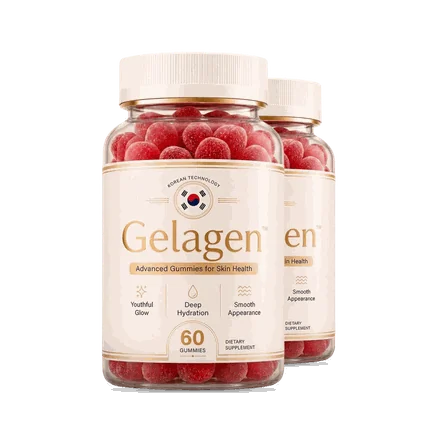
What’s actually on Gelagen’s label
This article was checked against Gelagen’s own supplement facts panel and reviewed by Dr. Audrey Rutherford, MD before publishing. Gelagen’s panel lists vitamin C at 20 mg per two-gummy serving, 22% of the Daily Value, in the form “ascorbic acid.” That’s worth stating plainly up front, because a lot of vitamin C marketing elsewhere implies that plain ascorbic acid is the budget, lower-performing option compared with “buffered,” “Ester-C” or “liposomal” versions. This article looks at what the research actually shows when ascorbic acid is compared head-to-head with those other forms.
What ascorbic acid is
Ascorbic acid is vitamin C in its simplest chemical form — the same molecule found naturally in citrus fruit, peppers and leafy greens, synthesized for supplement use rather than extracted from food. It is also the form used in essentially all of the foundational nutrition research that defines how much vitamin C the body needs and how efficiently it’s absorbed, which matters for the next section.
Chemically, a vitamin C molecule is a vitamin C molecule regardless of the form it’s delivered in — what differs between ascorbic acid, a mineral ascorbate like calcium ascorbate, or a liposomal preparation is not the active vitamin C itself, but what it is paired or packaged with on the way into the body. That is exactly why a direct, controlled comparison of absorption and excretion, rather than a comparison of the surrounding chemistry, is the only way to settle whether those packaging differences actually change how much vitamin C reaches circulation.
What “pharmacokinetics” actually measures
Several of the terms in this article — absorption, bioavailability, pharmacokinetics — get used loosely in supplement marketing, so it’s worth being precise about what the underlying research actually measures. Pharmacokinetics is the study of what happens to a substance after it enters the body: how much of it gets absorbed from the gut into the bloodstream, how high plasma concentrations rise, how quickly the body saturates or clears it, and how much ends up excreted unused. A pharmacokinetic study doesn’t ask whether a nutrient “works” in some general sense — it answers a narrower, more mechanical question: of the amount swallowed, how much actually made it into circulation, and on what timeline. That is exactly the kind of question a head-to-head comparison between ascorbic acid and a buffered form is suited to answer, and exactly the kind of question the Levine and Johnston/Luo studies below were each designed around.
The marketing pitch behind “buffered” vitamin C
“Buffered” vitamin C generally means a mineral ascorbate — calcium ascorbate or a similar salt — instead of plain ascorbic acid. “Ester-C” is a specific branded buffered form. “Liposomal” vitamin C encapsulates ascorbic acid in a fat-based shell intended to protect it through digestion. The common marketing claim across all three is that they are absorbed better, retained longer, or are gentler on the body than plain ascorbic acid. The question worth asking of any such claim is simple: compared against plain ascorbic acid in an actual controlled trial, is that true?
The study that set the RDA in the first place
The current vitamin C Recommended Dietary Allowance traces back to a landmark pharmacokinetic study: Levine and colleagues, “Vitamin C pharmacokinetics in healthy volunteers: evidence for a recommended dietary allowance,” published in the Proceedings of the National Academy of Sciences in 1996 (PMID 8623000). The study dosed healthy volunteers with a range of vitamin C amounts, using ascorbic acid, and tracked plasma and cellular concentrations to map out exactly how absorption and saturation behave as intake rises. It found that absorption is essentially complete at the lower end of typical intakes and that the body’s ability to use additional vitamin C saturates well before doses reach the gram range — the basis of the RDA still in use today. The point for this article: the form studied to establish how the body handles vitamin C at all was plain ascorbic acid, not a buffered or liposomal version.
The trial that compared three vitamin C sources directly
A more directly relevant study put the comparison to a real test. Johnston and Luo, “Comparison of the absorption and excretion of three commercially available sources of vitamin C,” published in the Journal of the American Dietetic Association in 1994 (PMID 8021423), was a randomized trial that gave healthy participants vitamin C from three different commercially available sources — including a buffered, mineral-ascorbate form — and measured both absorption and urinary excretion for each. The result: the study found no statistically significant difference in absorption or excretion between the three sources tested. In plain terms, this is one of the few studies that actually ran the “is buffered vitamin C absorbed better?” question as a controlled experiment, and the answer it returned was no meaningful difference.
| Study | What it measured | Relevant finding |
|---|---|---|
| Levine et al., 1996 (PMID 8623000) | Vitamin C pharmacokinetics across a range of doses, using ascorbic acid | Established the dose-absorption curve behind the current RDA; absorption is high at low-to-moderate doses and saturates at high doses |
| Johnston & Luo, 1994 (PMID 8021423) | Head-to-head comparison of three commercial vitamin C sources, including a buffered form | No significant difference in absorption or excretion between the sources tested |
What the evidence does and doesn’t support
Put together, these two studies support a specific, narrow conclusion: plain ascorbic acid is well absorbed at typical supplement doses, it is the form the foundational dose-response research used, and the one controlled comparison available did not find a meaningful absorption advantage for a buffered alternative. What the evidence does not support is the broader marketing claim that buffered, Ester-C or liposomal forms are reliably better absorbed than plain ascorbic acid — at least not based on this trial. That is a different, more specific statement than “ascorbic acid is the only legitimate form of vitamin C,” which this article is not making either. It is simply that the bioavailability gap often implied in marketing isn’t what this particular head-to-head trial found.
Why form-based marketing claims spread so easily
It’s worth asking why “buffered is better absorbed” became such a common claim in the first place, given what the Johnston and Luo trial actually found. Part of the answer is mechanistic plausibility: buffered forms genuinely behave differently in the stomach, chemically, because mineral ascorbates are less acidic than plain ascorbic acid. That real, measurable chemical difference is easy to describe in marketing copy, and it’s a short, intuitive leap from “chemically different in the stomach” to “therefore better absorbed” — even when that second step isn’t what a controlled trial actually demonstrates. A chemical difference at the point of contact with stomach acid doesn’t automatically translate into a difference in how much of the nutrient eventually reaches the bloodstream, and the Johnston and Luo data is a direct test of that specific gap between mechanism and outcome.
The same pattern shows up across a lot of supplement ingredient marketing more broadly: a real, verifiable chemistry fact (this form dissolves differently, this form has a different pH, this form is structurally modified) gets used to imply a performance conclusion (better absorbed, more effective, superior) that would need its own separate, direct evidence to support. Reading a bioavailability claim carefully means noticing exactly where that gap sits, and asking whether anyone has actually tested the performance claim itself, rather than just the underlying chemistry fact.
What this evidence does not cover: liposomal claims
In the interest of not overstating what the cited research shows, it’s worth being explicit about its limits. The Johnston and Luo trial compared three vitamin C sources that were commercially available in 1994; liposomal vitamin C, as a widely marketed consumer product, is a more recent development, and this article is not aware of that specific trial having tested a liposomal form against plain ascorbic acid. That means this article’s conclusion is narrower than “no form of vitamin C is ever better absorbed than ascorbic acid” — it is specifically that the one rigorous, randomized, head-to-head comparison available, covering plain ascorbic acid against a buffered mineral-ascorbate source, found no meaningful difference. Claims specifically about liposomal delivery are a separate question this article is not attempting to settle, and a shopper encountering that claim elsewhere should look for its own head-to-head evidence rather than assuming the buffered-form findings automatically extend to it. The broader, more general principle this article is making is simply that “a different delivery format” and “a proven absorption advantage, tested directly against plain ascorbic acid” are two different claims, and only one of them is backed by the randomized evidence reviewed here.
The one place “buffered” does have a real effect
Buffered forms do have one well-documented, genuine advantage: because mineral ascorbates are less acidic than ascorbic acid, they tend to be gentler on the stomach at high doses — multiple grams per day, well above what a typical multivitamin or gummy delivers. That is a real, legitimate reason some people choose a buffered form, especially at therapeutic or high-dose intake. It is a tolerability difference, though, not an absorption difference, and the two get conflated in a lot of marketing copy.
How this applies to a 20 mg gummy dose
A 20 mg serving, like Gelagen’s, is far below the range where stomach tolerance becomes a practical concern for almost anyone — that issue shows up at gram-level doses, not milligram-level ones. At 20 mg, the relevant question is simply whether the vitamin C gets absorbed, and the pharmacokinetic research says absorption efficiency is at its highest in exactly this low-to-moderate dose range, regardless of whether the source is ascorbic acid or a buffered alternative.
It’s also worth placing that 20 mg amount in context against typical research dosing: vitamin C depletion and repletion studies, including the Levine pharmacokinetic work, generally examine intakes from roughly 30 mg up into the hundreds of milligrams and beyond, as part of mapping out the full absorption curve. A 20 mg gummy serving sits toward the lower end of that studied range, which is also the range the pharmacokinetic data shows is absorbed most efficiently, before the diminishing returns of higher doses start to show up.
How to evaluate a bioavailability claim yourself
Ask what was actually compared
A claim that a form is “better absorbed” is only as strong as the comparison behind it. Was it tested directly against another form in humans, or is it an inference from a lab or animal study?
Look for the dose that was tested
Findings about gram-level doses don’t automatically apply to a 20 mg gummy serving, and vice versa — absorption efficiency genuinely changes across that range.
Separate absorption claims from tolerability claims
“Gentler on the stomach” and “better absorbed” are two different properties. A form can legitimately have one without the other.
Check whether a citation is traceable
A specific, checkable citation — like the PMIDs in this article’s sources — can be looked up directly. A vague appeal to “studies show” cannot.
Quick checklist
- Gelagen’s panel lists 20 mg of vitamin C as plain ascorbic acid (22% DV).
- Ascorbic acid is the form used in the pharmacokinetic study behind the current vitamin C RDA (PMID 8623000).
- A randomized head-to-head trial of three commercial vitamin C sources found no significant absorption or excretion difference (PMID 8021423).
- Buffered forms’ clearest advantage is gentler digestion at gram-level doses, not better absorption.
- At a 20 mg dose, absorption efficiency is already high regardless of form.
Sources
- Gelagaen.com. Supplement Facts — Vitamin C, 20 mg (as ascorbic acid), 22% DV. Checked October 1, 2026.
- Levine M, Conry-Cantilena C, Wang Y, et al. Vitamin C pharmacokinetics in healthy volunteers: evidence for a recommended dietary allowance. Proc Natl Acad Sci U S A. 1996;93(8):3704-3709. PMID: 8623000.
- Johnston CS, Luo B. Comparison of the absorption and excretion of three commercially available sources of vitamin C. J Am Diet Assoc. 1994;94(7):779-781. PMID: 8021423.
- National Institutes of Health, Office of Dietary Supplements. Vitamin C: Fact Sheet for Health Professionals. NIH ODS, current revision. Checked October 1, 2026.
Questions on this topic
More answers on the full FAQ page.
What form of vitamin C does Gelagen use?
Plain ascorbic acid, at 20 mg per two-gummy serving (22% of the Daily Value), according to Gelagen’s own supplement facts panel.
Is buffered vitamin C absorbed better than ascorbic acid?
A 1994 randomized trial comparing three commercially available vitamin C sources, including a buffered mineral ascorbate, found no significant difference in absorption or urinary excretion between them.
Why is ascorbic acid used to set the RDA?
Because the pharmacokinetic study behind the current Recommended Dietary Allowance for vitamin C, published in 1996, used ascorbic acid to establish how the body absorbs and saturates with the vitamin at different doses.
Is there any real benefit to a buffered form?
The main documented benefit of a buffered (mineral ascorbate) form is reduced stomach irritation at high doses, not superior absorption, which matters most for people taking gram-level doses rather than a 20 mg gummy serving.
Does 20 mg of ascorbic acid absorb efficiently?
Yes. Research on vitamin C pharmacokinetics shows absorption efficiency is highest at low-to-moderate doses and only drops as doses climb into the multi-gram range, which a 20 mg serving is far below.

Ready to try Gelagen?
Packs start at $49 a bottle on the 6-bottle order. Every order carries the 60-day money-back guarantee. Questions first? The contact page lists both desks and what each one handles.
Sold by the Gelagen U.S. shop, an authorized Gelagen retailer. This site earns when you buy.