From the blog
What “Foreign and Domestic Ingredients” Actually Discloses
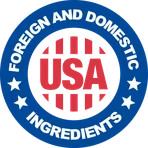
“Made with Foreign and Domestic Ingredients” is a qualified sourcing claim, not an unqualified “Made in USA” claim. Under FTC guidance, a qualified claim tells shoppers the product is not entirely domestic without naming which ingredients, which countries, or what share of the formula came from where. It still has to be truthful and backed by the marketer’s own records — the FTC doesn’t pre-certify it — but the seal itself isn’t a percentage disclosure or a country list.
What the claim actually says
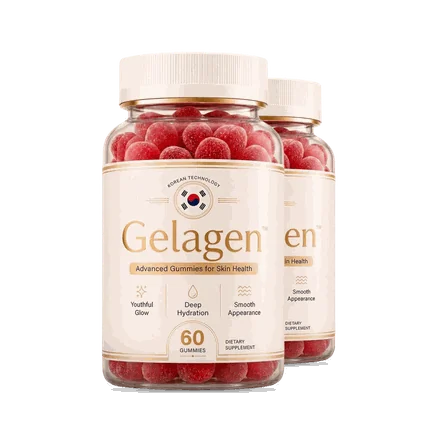
Every article on this site, including this one, is reviewed by Dr. Audrey Rutherford, MD before it publishes, and checked against the product’s own packaging artwork. Gelagen’s bottle and its testing and quality page both carry a seal reading “Made with Foreign and Domestic Ingredients.” Read quickly, a phrase like that can sound reassuring — as if someone has confirmed exactly where every ingredient comes from. Read literally, it says something much narrower: the formula contains a mix of domestically sourced and internationally sourced ingredients. That is the entire factual content of the statement. It does not name a country. It does not give a percentage. It does not say which specific ingredients are which.
To understand why a company would print a statement that vague, it helps to look at the federal guidance that shapes how U.S.-origin claims are allowed to be worded in the first place: the Federal Trade Commission’s Made in USA rules.
A brief history of the Made in USA standard
The FTC has policed U.S.-origin advertising claims under its general authority to prevent deceptive marketing since the FTC Act itself, but the modern framework dates to 1997, when the agency published an Enforcement Policy Statement on U.S. Origin Claims after a round of consumer research and public comment. That statement is what formally set out the “all or virtually all” bar for an unqualified claim and distinguished it from qualified claims like the one on Gelagen’s packaging. For over two decades, that policy statement — guidance, not a binding rule — was the main framework companies worked within. In August 2021, the FTC went a step further and finalized the Made in USA Labeling Rule itself, codified at 16 C.F.R. Part 323, which took the same “all or virtually all” standard and made it directly enforceable with civil penalties for violations on labels, not just general advertising. Qualified claims, including mixed-sourcing statements, were not swept into that stricter labeling rule — they remain governed by the truthful-and-substantiated standard the 1997 policy statement set out, which is why a “foreign and domestic ingredients” claim doesn’t face the same civil-penalty exposure an inaccurate unqualified “Made in USA” label would.
Ingredient sourcing vs. where a product is made
It’s worth separating two questions that a phrase like “foreign and domestic ingredients” can blur together: where the raw materials came from, and where the finished product was actually manufactured, filled and packaged. A supplement can be formulated and manufactured entirely in a U.S. facility — the kind of facility covered by the registration and GMP rules discussed elsewhere on this site — while still using some ingredients sourced from outside the U.S., because the raw vitamin, mineral or botanical inputs for the finished product are a global commodity market. “Foreign and domestic ingredients” is a statement about that second thing: the origin of inputs, not the location of the manufacturing floor.
Qualified vs. unqualified “Made in USA” claims
The FTC’s business guidance, “Complying with the Made in USA Standard,” draws a sharp line between two kinds of U.S.-origin claims. An unqualified claim — a bare “Made in USA” with no caveat — has to meet the “all or virtually all” standard. The FTC’s own language: the Commission “has required that a product advertised as Made in USA be ‘all or virtually all’ made in the U.S.” Since 2021, this standard is codified as a rule (the Made in USA Labeling Rule, 16 C.F.R. Part 323), and a marketer can face civil penalties for an unqualified claim that doesn’t meet it.
A qualified claim is different by design. The FTC defines it as a claim that “describes the extent, amount or type of a product’s domestic content or processing” and “indicates that the product isn’t entirely of domestic origin.” Its own examples include “60% U.S. content,” “Made in USA of U.S. and imported parts,” and “Couch assembled in USA from Italian Leather and Mexican Frame.” “Made with Foreign and Domestic Ingredients” sits in this same category: it is a qualified claim that discloses mixed sourcing without the specificity of a percentage or a parts list.
| Claim type | Example | Standard that applies |
|---|---|---|
| Unqualified | “Made in USA” | Must be “all or virtually all” made in the U.S. (16 C.F.R. Part 323) |
| Qualified, specific | “60% U.S. content” | Must be truthful and substantiated; implies a defined share |
| Qualified, general | “Made with Foreign and Domestic Ingredients” | Must be truthful and substantiated; discloses mixed sourcing without a defined share |
A related but separate rule: country-of-origin marking
The FTC’s own Made in USA guidance notes that it sits alongside a different requirement entirely: U.S. Customs and Border Protection (CBP) requires that products of foreign origin imported into the U.S. be marked with their country of origin, under a separate body of customs law. That CBP marking requirement applies to imported goods generally and is about informing the end purchaser where an imported item was made. It is not the same system as the FTC’s Made in USA guidance, which governs how a marketer can describe a finished product’s domestic content in its own advertising and labeling. A dietary supplement formulated with some imported raw materials isn’t itself an “imported product” in the CBP sense if the finished gummy or capsule is manufactured, filled and packaged in the U.S. — the CBP marking rule is about imported goods crossing the border, not about every ingredient that ever crossed a border at some earlier stage of the supply chain.
What the claim does not disclose
Because the statement is a general qualified claim rather than a specific one, there are several things it deliberately leaves out:
- No country names. “Foreign” could mean one country or several; the statement doesn’t say.
- No percentage split. It doesn’t commit to a number the way “60% U.S. content” does.
- No ingredient-by-ingredient map. It doesn’t say whether, for example, a specific vitamin is the imported component and a specific mineral is the domestic one.
- No independent verification stamp. The claim is the marketer’s own statement, not a result certified by the FTC, FDA, or a third-party lab.
None of this makes the statement false. A general qualified claim is allowed to be general. The point of reading it carefully is simply to notice that “foreign and domestic” is doing less work than it might first appear to — it tells you sourcing is mixed, and stops there.
Who checks that the claim is true
This is the part that surprises a lot of shoppers: the FTC does not pre-screen origin claims before a company prints them. The agency’s role is after the fact. Its guidance states plainly that a qualified Made in USA claim, “like an unqualified claim, must be truthful and substantiated” — meaning the company has to be able to back it up with real sourcing records if the FTC or a competitor challenges it, under the FTC Act’s general ban on deceptive marketing. There is no seal of approval issued in advance. A company prints the claim, keeps the paperwork that supports it, and is answerable for it if questioned later.
A real FTC example of how this is judged
The FTC’s own guidance includes a worked example that shows how little domestic content can still make an unqualified-sounding claim deceptive, and it’s useful for understanding why companies lean on general qualified wording instead. In the example, a treadmill is assembled in the U.S. — a step the FTC agrees is significant, enough to count as a “substantial transformation.” But the major parts (motor, frame, electronic display) are all imported; only incidental parts like handlebar covers and the power key are U.S.-made, together worth about 3% of the total parts cost. The FTC’s conclusion: calling that treadmill “Made in USA of U.S. and Imported Parts” would be deceptive, because the claim implies more domestic content than 3%. A more honest label, in the FTC’s own words, would be “Made in U.S. from Imported Parts” or “Assembled in U.S.A.”
The lesson isn’t about treadmills specifically — it’s that even a qualified claim has to match reality, and the more specific the wording, the more exactly it has to match. A broad statement like “foreign and domestic ingredients,” which commits to no percentage at all, is in some ways a lower-risk way to be accurate about mixed sourcing than a specific-sounding claim that overstates the domestic share. This is also precisely why the FTC’s guidance cautions marketers against vague-sounding general terms like “produced,” “created” or “manufactured in the U.S.” when only part of a process happened domestically — the agency’s view is that broad terms like these tend to imply more U.S. content than a narrower, more specific description would, so a claim limited to a specific process or part has to say so clearly rather than relying on general manufacturing language.
Why a mixed-sourcing statement exists at all
Dietary supplement formulas routinely combine ingredients sourced from multiple countries — a specific vitamin form, a specific mineral chelate, or a specific botanical extract may simply be more reliably available, at the needed purity and price, from a particular overseas supplier, while other components are sourced domestically. A “foreign and domestic” disclosure is a straightforward, honest way to say that without implying the all-domestic sourcing an unqualified “Made in USA” label would promise under the FTC’s “all or virtually all” standard. It is a disclosure of mixed sourcing, not a sourcing map and not a purity claim.
Why supplement ingredients cross borders in the first place
Dietary supplement manufacturing runs on a genuinely global raw-material market. A specific vitamin form, a specific mineral chelate or a specific botanical extract, at the purity and specification a manufacturer needs, may be produced at scale by only a handful of facilities worldwide, and those facilities aren’t necessarily in the U.S. That isn’t unique to any one brand or product category — it’s a structural feature of how vitamins and minerals are manufactured as industrial chemicals before they ever reach a gummy, capsule or tablet production line. A “foreign and domestic” disclosure is, in that light, a realistic acknowledgment of how these supply chains actually work, rather than a claim that something unusual or concerning is happening. The relevant question for a shopper isn’t really “why would any ingredient be imported,” since that’s close to universal in this industry — it’s whether the company is being straightforward about it, which a mixed-sourcing disclosure, by definition, is.
How to read this seal like a label-literate shopper
Treat it as a sourcing disclosure, not a quality claim
“Foreign and domestic” is about where ingredients came from, not whether they were tested or how pure they are.
Don’t read in a percentage that isn’t stated
Unless a label specifically says “X% domestic,” assume the split is unspecified.
Remember the FTC doesn’t pre-certify it
The claim is the company’s own statement, substantiated on request, not an agency-issued verification.
Compare it to the stricter “Made in USA” standard
An unqualified Made in USA claim has to clear the “all or virtually all” bar. A foreign-and-domestic claim exists precisely because the product doesn’t clear that bar, and says so.
Quick checklist
- “Foreign and domestic ingredients” = a qualified sourcing claim; the product is not entirely domestic.
- No country, no percentage, and no ingredient-by-ingredient breakdown is implied by the phrase itself.
- The FTC doesn’t verify the claim in advance; the marketer substantiates it if asked.
- It is governed by FTC Made in USA guidance, not by FDA dietary supplement regulation.
- It’s a different claim from an unqualified “Made in USA” label, which has to meet the stricter “all or virtually all” standard.
Sources
- Gelagaen.com. Testing & Quality, including the “Made with Foreign and Domestic Ingredients” seal as described on the product’s own packaging artwork. Checked October 1, 2026.
- Federal Trade Commission. Complying with the Made in USA Standard. FTC Business Guidance. Checked October 1, 2026.
- Federal Trade Commission. Made in USA Labeling Rule, 16 C.F.R. Part 323. Checked October 1, 2026.
Questions on this topic
More answers on the full FAQ page.
Does “foreign and domestic ingredients” name which country an ingredient came from?
No. The phrase discloses that sourcing is mixed, not a specific country for any specific ingredient.
Does it say what percentage of the formula is domestic?
No. Unlike a claim such as “60% U.S. content,” a general foreign-and-domestic statement does not commit to a percentage.
Does the FTC test or verify the claim before it’s printed?
No. The FTC does not pre-approve origin claims. A marketer must be able to substantiate the claim if asked, and the FTC can act after the fact if a claim is deceptive.
Is this the same as an unqualified “Made in USA” claim?
No. An unqualified Made in USA claim requires the product be “all or virtually all” made in the U.S. under the FTC’s Made in USA Labeling Rule. A foreign-and-domestic statement is a qualified claim, which by definition means the product is not entirely domestic.
Is a qualified claim less regulated than an unqualified one?
It still has to be truthful and substantiated. The FTC’s own guidance warns that even qualified claims can mislead if the domestic share is negligible, as in its treadmill example.

Ready to try Gelagen?
Packs start at $49 a bottle on the 6-bottle order. Every order carries the 60-day money-back guarantee. Questions first? The contact page lists both desks and what each one handles.
Sold by the Gelagen U.S. shop, an authorized Gelagen retailer. This site earns when you buy.